
Maintaining

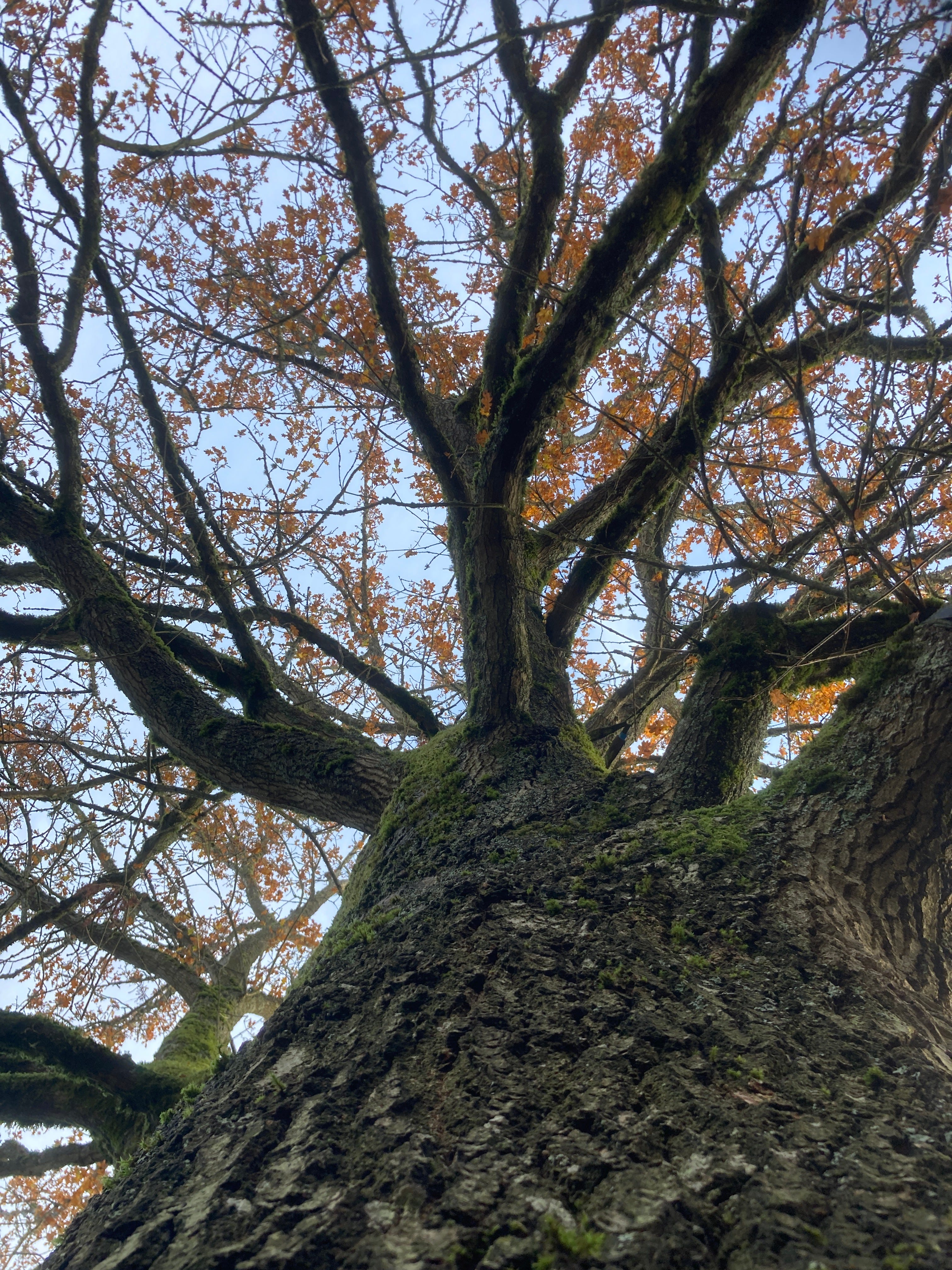
In Egills Saga Skallagrímsson, there's a scene where Egill and his friend Arinbjörn are discussing how to deal with the domineering King Hakon of Norway.
Arinbjörn carefully summarizes his strategy as:
"..þá verður eik að fága er undir skal búa.“
This loosely translates to "you should tend the oak if you want to live under it." This proverb's figurative implications are interesting for the story as well as Arinbjorn's tactful and measured character, but it's the literal gloss that has stuck with me over the years, so much so that I carved these words on my backyard shed. It becomes that much more prescient in fall when my English Oak drops what seems like an infinite number of small lobed pale apricot colored leaves, finding their way into every crevice and crack from ground to gutter. So this nearly 800 year old saying (probably older) serves as my autumnal refrain, a gentle reminder that unlike Arinbjörn’s maintenance, mine is an act of love. The hassle, bags of leaves, and hours raking in the fall in turn provide ample shade for our small house, a respite from summer's evergrowing heat.
During my many stints of raking, bagging, and tending my oak this fall, I discovered how perfectly the revived French heritage brand, Oriza Legrand's Horizon fits into this maintenance routine. While the copy reads that it celebrates its 100th birthday this year, as usual, the additional imagery doesn't seem to be written for me. It's even harder to situate the current formulation in the roaring twenties especially after reading the notes on Fragrantica, which is probably my first mistake (marmalade, soil, and cacao). Anachronisms aside, one thing that did resonate was the note of "old oak," listed on Luckyscent's website, less so for the perception of oak wood or oak barrels in the perfume and more for Horizon's steadfast feel; It's the old rugged cross and the rock of ages. It's a heart of oak and the pews of a white-washed Methodist church. My English Oak too is sturdy, resilient in the face of human greed. It was "ringed," the cut near the bottom of the trunk still visible, when we moved in. Owners wanted to kill it, showing to arborists that it was dangerous and had to be removed, more than likely in order to clear the lot and sell big. Today, its scar is completely healed over.
Horizon is built around patchouli, vanilla, and rose, an unmistakable combo that's just as common as it is comforting. Two other stellar examples of this style are Borneo 1834 and Psychedelique. The addition of the rose in Horizon dries out the patchouli and here in my driveway, makes the brown leaves that much more crisp. Patchouli is typecast in the role of soil, dank, and leaf mold. It contains just enough dampness from the last rain to make bagging it difficult. The mosses that dislodge from the tree adds a powdery green mustiness to the air. I stuff those into the bags as well as the Western Sword fern fronds, most dead-brown, but some accidentally fresh-green. I picture myself being mistakenly raked up and packed away into the lifesize hardware store leaf bags and sent to the compost center like Indian clothing shipped in patchouli leaves bound for England. Despite how much Horizon I sprayed, I would be moth eaten for sure. I look up at the block headed junkos, skittering higher than usual in the oak, dropping leaves here and there as they land on branches. They would have been easy targets for my old outside cat, Eevee, but now are free to move about all parts of the tree uninterrupted, their hubris noted only from the window by my attentive inside kittens, Arnold and Abbey.
There is also generalized auburn sweet leafy woodiness in Horizon that I've never been able to adequately achieve in my own fall inspired creations. It reads as an old school tobacco, a style that's been updated with a sheer veneer of more transparent yet stronger woody ambers. Horizon is definitely an old manchouli (ok, I made that up), more at home with a staid pastoral outlook than the wild abandon of the dashing "on the make" urbanite of the era. My first thought is to rush to my lab to replicate Horizon, improve it, put my twist on it, and distract me from my other creations that have been taxing my brain. I'm fighting that urge amd focusing on tending.
The Old Norse word for fall is haust which doesn't have the leafy connotations that the American English word fall does. Haust instead meant harvest and could be used as a verb to mean to bring in the harvest. On one hand, I like the arborcentric term fall as it takes humans out of this age long pattern and makes us irrelevant. On the other, haust captures the human compact we have with the land. To me, personally, it precisely captures my physical actions required of the season. I'm harvesting, picking up, bringing in the leaves. My oak is one of the last trees in the neighborhood to completely drop its leaves. Leaves will be falling and I'll be both harvesting, tending, maintaining well into Winter.
For those still enjoying the fall, here's a Fall themed drone, called Haust.
Quite the lush entry, much to appreciate here. And I think we need to add “manchouli” to our scent lexicon! Love the tend your oak adage - seems to mirror one I think about a lot - “grass grows where you water it”. I wish we had Oriza L LeGrand on offer locally.